Not an inch of plank was to go to sea
In 1371 the founding emperor of the Ming forbade the coastal population of China to go abroad. The ban held for close to two hundred years, and it survives in a single line: not an inch of plank was to go out to sea. Only in 1567 did the Longqing emperor open the coast again.
From that year the junks of south China could sail lawfully. It was the moment the Đại Chiêm mouth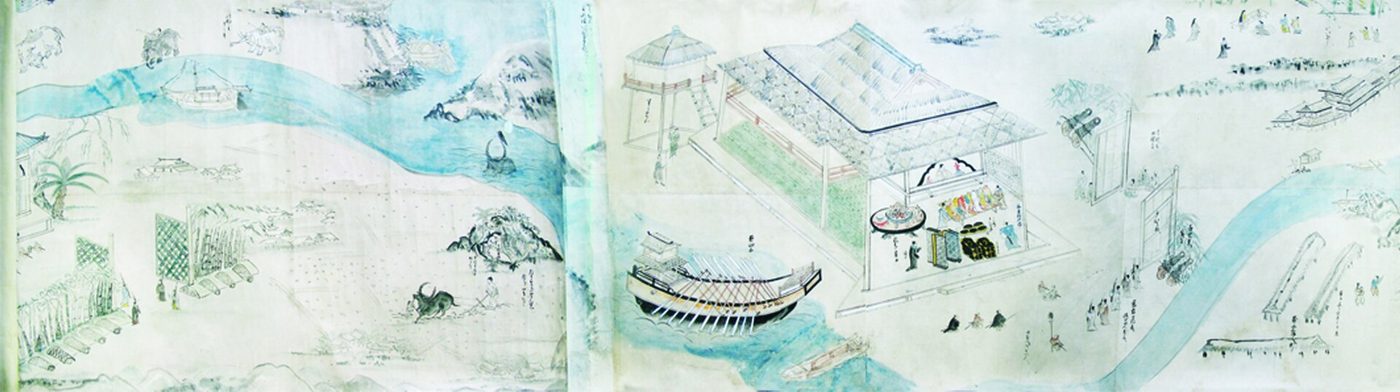 ERA · TRADING PORTFaifo, the Port Centuryc. 1523 – 1778Once a year the monsoon carried Japanese, Chinese and Portuguese ships into a river mouth in Quảng Nam, and they stayed four months. The Nguyễn lords taxed each ship by where it had come from. A European ship paid the most, eight thousand quan to enter. was becoming the place ships gathered. Ming men mostly ran south on the north-east monsoon in winter and waited for the south-west monsoon in summer to go home. The town named them for the way they arrived: người Tàu, written in Nôm as 人艚, the character for a person joined to the character for a seagoing junk, the people who came by boat.
Policy on the far side of the sea decided who could come. Hội An kept its harbour open throughout. The ships could only sail when Beijing stopped forbidding it.
Lodgings for men who meant to leave
The place where Ming merchants gathered at Hội An was first called Đại Minh khách phố, the guest quarter of the Great Ming, and later Đại Đường nhai, the street of the Great Tang. Both names say the same thing. This was lodging for guests. Chen Ching-Ho, whose study of these records is the one everyone else builds on, classed both as sojourners' quarters with an end date.
They were not all merchants. Among the Chinese at Hội An were craftsmen, physicians, geomancers, schoolmasters, scholars, labourers, soldiers and officials. Every one of those trades had work in a port, and every one of them could stay.
A man who traded for one season and sailed home needed no status at all. Things changed when men stopped being able to sail home.
A temple that worked as a court
Before the year Khánh Đức Quý Tỵ, that is before 1653, the Minh Hương and the Vietnamese together raised the Quan Công temple in the middle of town. Both communities built it. Neither built it for the other.
The temple had a very worldly job to do. A port town makes contracts, debts and loans every day of the week, and paper between men who do not share a language is hard to enforce. So the parties were brought before the altar of Quan Thánh to swear. He stood witness to good faith in trade, and he punished the man who went back on his word. The town's chief place of worship was also the place where disputes were settled.
 Photograph · Chainwit. · Wikimedia Commons · CC BY 4.0
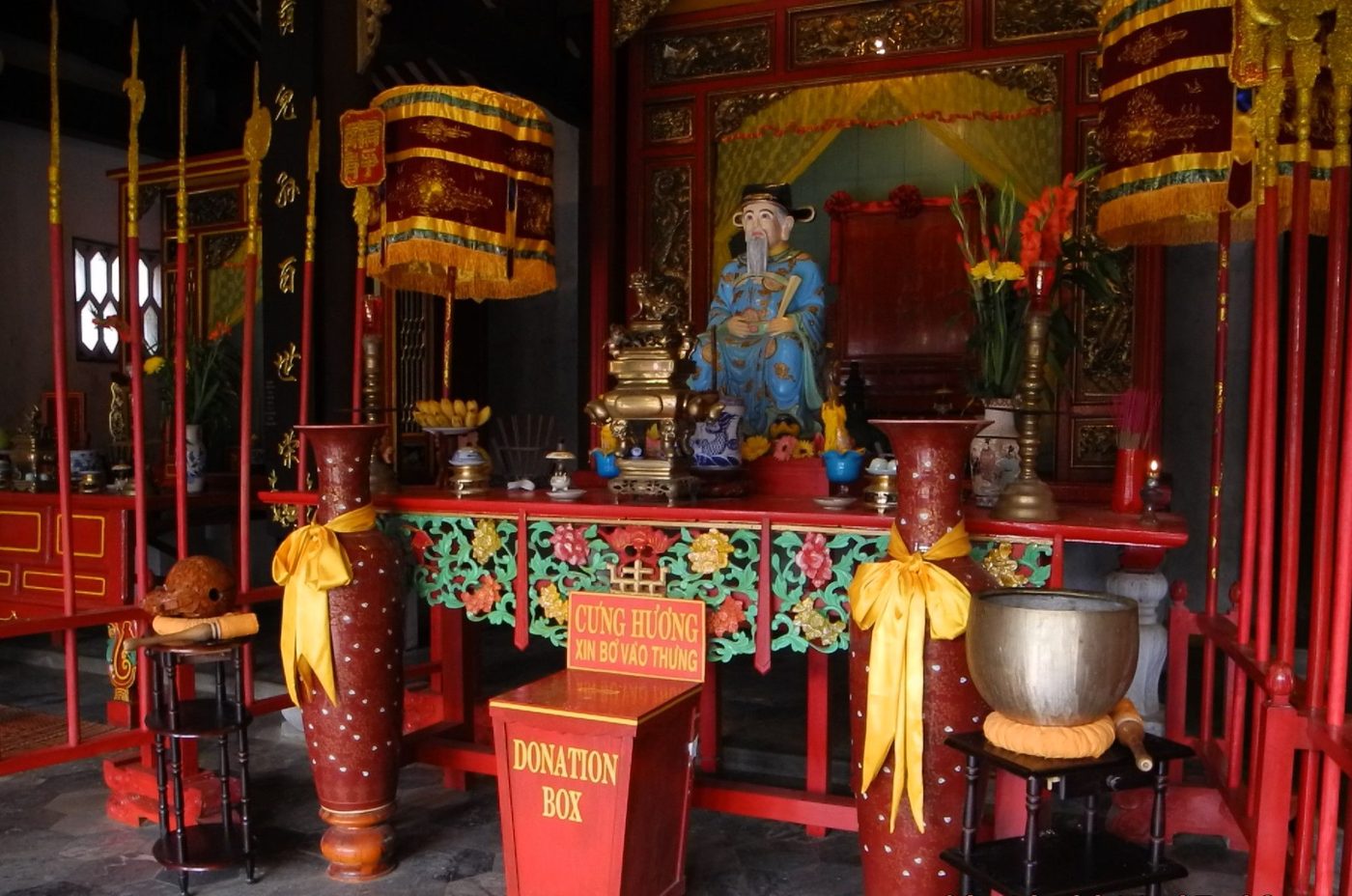 Photograph · Franzfoto · Wikimedia Commons · CC BY-SA 3.0
Three thousand men came asking to serve
The Ming fell, and Ming men who would not serve the Qing began to move. The Nguyễn lords' Quảng Nam lay far from Qing armies, so the lord opened his door. Ming men were a resource that could be used against the Trịnh in the north and to open land in the south.
The imperial chronicle, in the fifth book of its preliminary section, records that in 1679 the commanders Dương Ngạn Địch of Long Môn and Trần Thượng Xuyên of Cao Lôi Liêm brought more than 3,000 troops to submit to the lord. The lord gave them ranks and sent them south to open land.
Scholars still argue about the year. Trịnh Thụy Minh holds that after the revolt of the Three Feudatories, which is 1681, makes better sense. Chen Ching-Ho puts it at the turn of 1682 into 1683. The Minh Hương Gia Thạnh hall in Sài Gòn prints 1683 in its own booklet. This archive keeps the chronicle's year and records that the question is open.
Not a bloodline but a register
For Ming men who meant to settle, the Nguyễn lords devised a separate institution called the Minh Hương xã. The name was then written 明香, and it meant to keep the incense of the Ming burning.
Most of the men on its books were Ming, or of mixed Ming and Vietnamese parentage. Five adult males were enough to found one, and that threshold shows it was never quite a village in the ordinary sense. Under the lords there was no bang organisation in Đàng Trong at all. Chinese residents fell inside two administrative units and no others, the Minh Hương xã and the Thanh Hà phố.
Minh Hương, in other words, was not an ethnicity. It was a standing before the law, and a man entered it by having his name written into a register.
From incense to village
Under the new dynasty, Gia Long renamed every Đại Minh khách phố and Thanh Hà phố a Minh Hương xã, to mark them off from the bang of newly arrived Qing subjects.
Then in the seventh month of 1827 the court issued an edict changing a character. The Hương written 香, with the incense radical, gave way to the Hương written 鄉, with the settlement radical, which means one's native village. The stated reason was to keep relations with the Qing court cordial.
One stroke of a brush changed what a community was. Before it, these were people keeping the incense of a fallen dynasty. After it, they were the village of Chinese who had come since the Ming. The first is a vow. The second is a line in a household register.
A bang head held a whole life
The bang organisation dates only from the Nguyễn dynasty. A bang gathered men from one home region who spoke one dialect, so Hội An had 5 of them: Fujian, Canton, Chaozhou, Hainan and Gia Ứng.
Its head was the bang trưởng, elected by the members and then confirmed by the provincial authorities. His authority was very wide. It began the moment a migrant stepped ashore and asked to enter, and it followed him for the rest of his life.
The court gained two things from the arrangement. One was a machine for collecting tax inside the community without having to build one. The other was a clean boundary in the household registers between Qing subjects and Minh Hương, and that boundary pulled Minh Hương families faster into the local population.
The scholar who describes the system also names its costs. A bang that governs itself long enough acquires the capacity to govern itself in earnest, especially as its head grows powerful and the community grows rich. And once the bang exists, new arrivals and old residents are split into two populations with no shared door between them.
Every bang built one, except one
The Trung Hoa hall and the Fujian hall came first, in the early eighteenth century. The others are considerably later: the Chaozhou hall in 1845, the Quỳnh Phủ hall of the Hainanese in 1875, the Quảng Triệu hall of the Cantonese in the second half of the nineteenth century.
Of the 5 bang at Hội An, the Gia Ứng bang is the only one with no hall of its own. The inscriptions, boards and couplets inside the other halls call them the Gia Ứng bang, not by the name now more commonly used for that group.
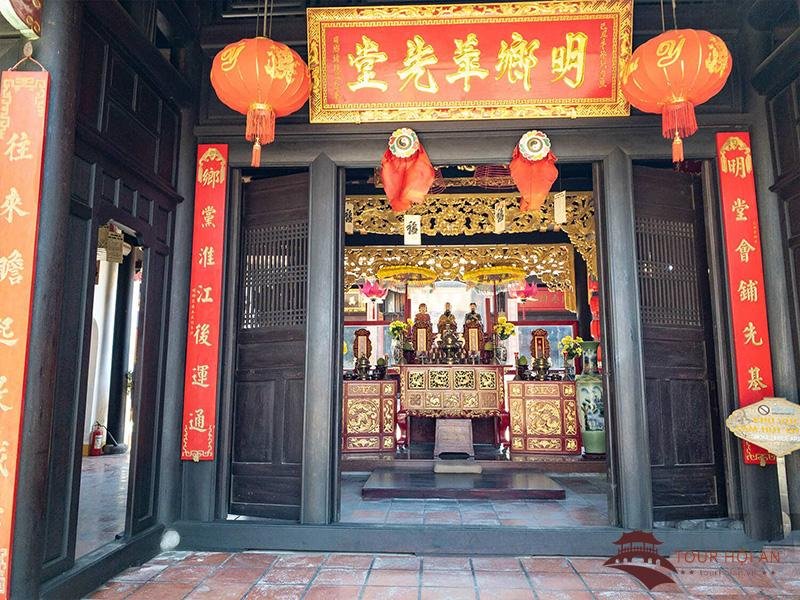
One common house belongs to no bang at all. The Minh Hương Tụy Tiên Đường is the house of the Minh Hương, at once a hall and a communal shrine, and it is not a sojourning merchants' hall. The difference between the two kinds of building is exactly the difference between the two registers.
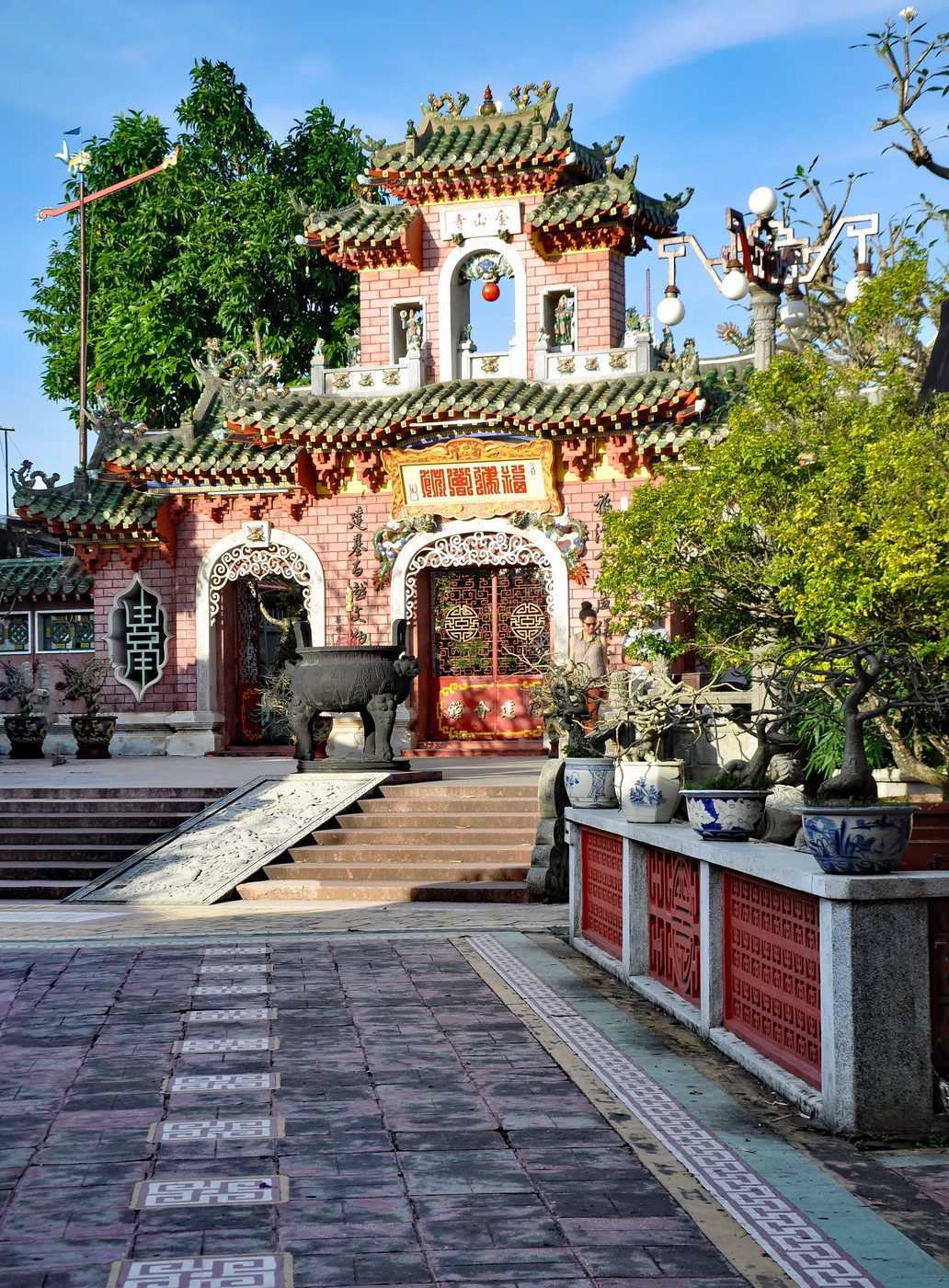 Photograph · P. Hughes · Wikimedia Commons · CC BY 4.0
 Photograph · Christophe95 · Wikimedia Commons · CC BY-SA 4.0
A community measured in square metres
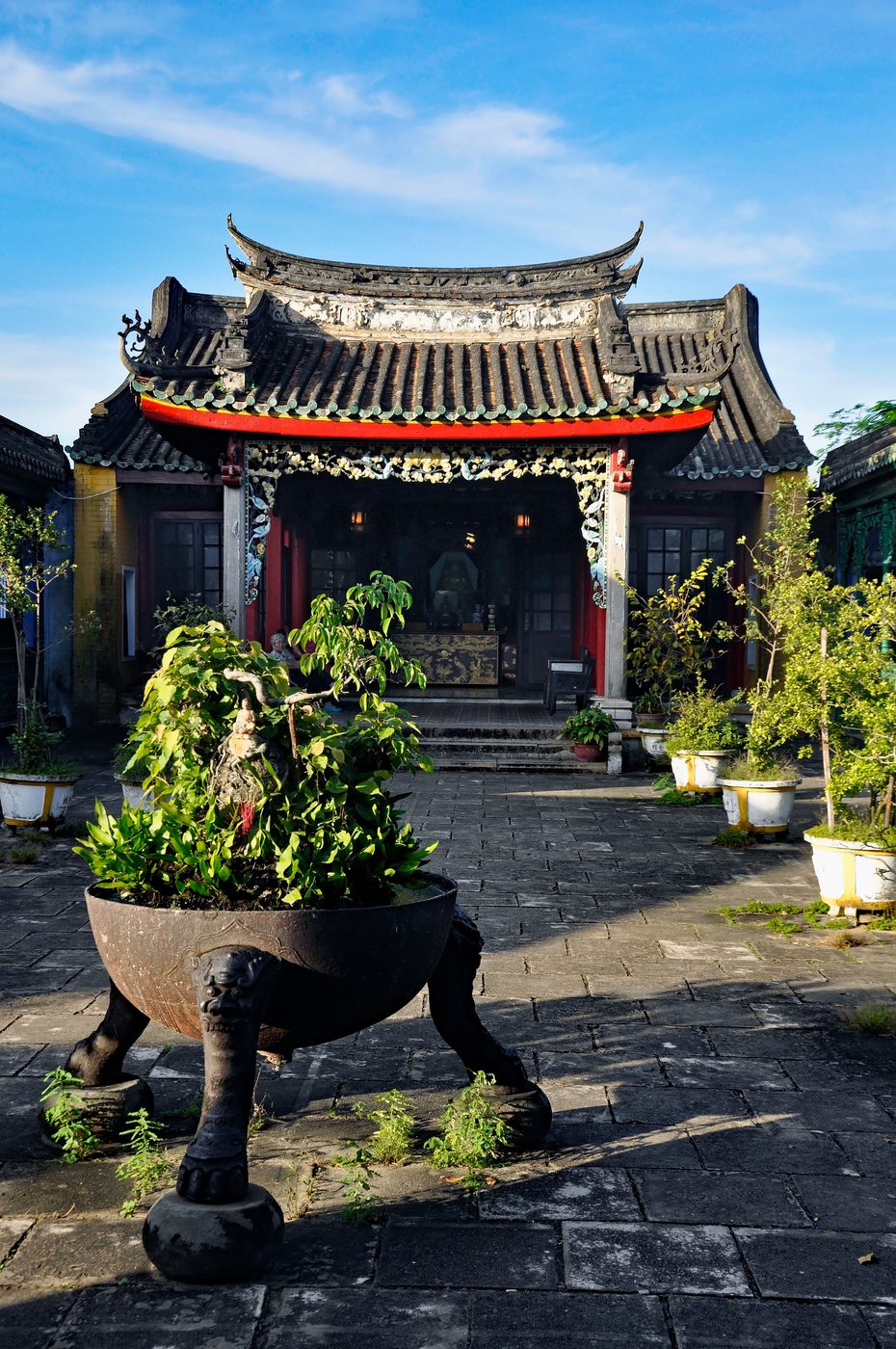
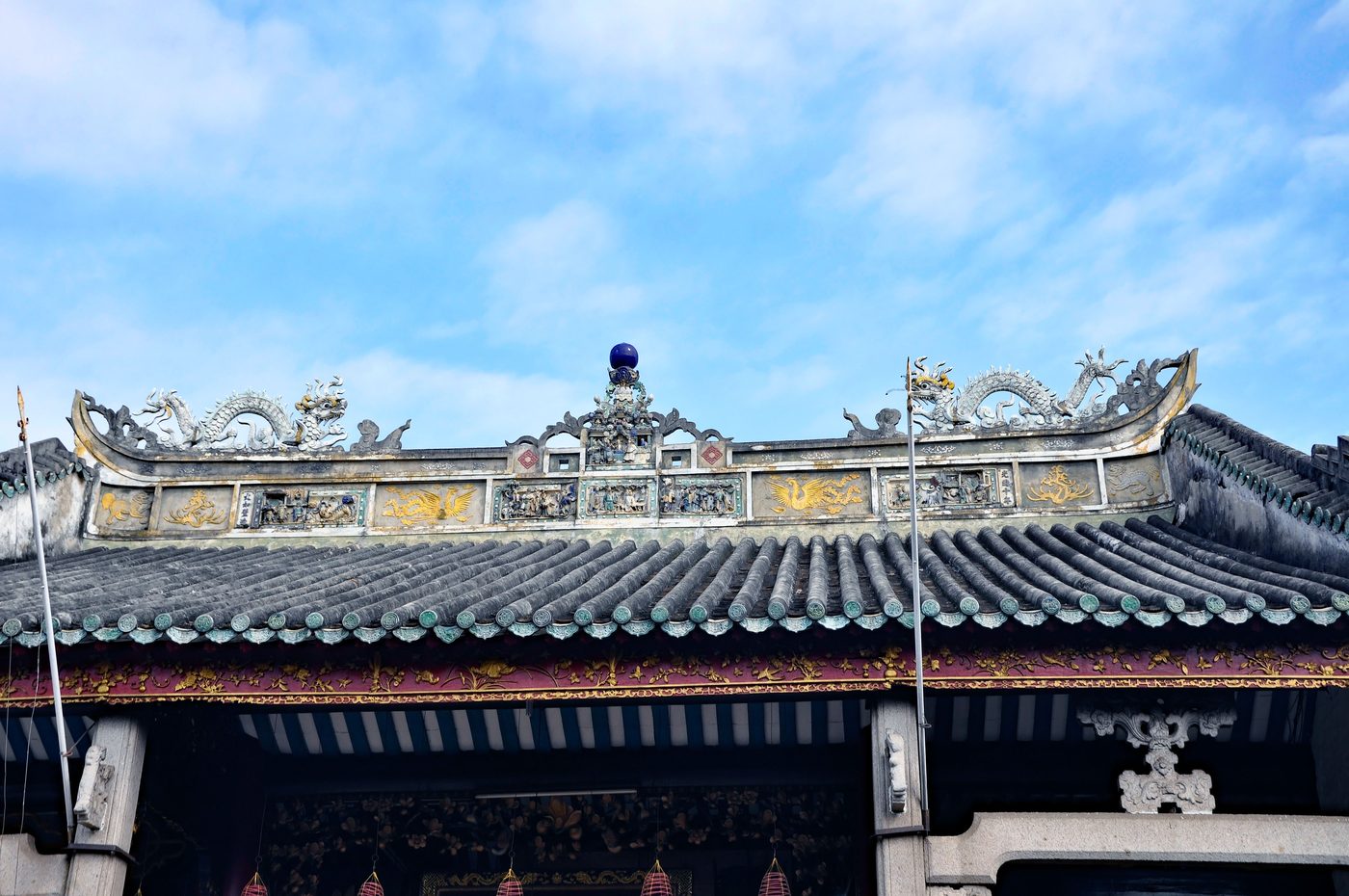
All five halls stand in the crowded centre, near the market, and all five stand east of the Japanese Bridge. They follow the old Chinese temple manner: symmetrical, the walls only screens between rooms, the whole weight carried on a timber frame.
The Fujian hall at 46 Trần Phú is the largest, 2,000 m² of building, 100 m at its deepest and 24 m at its widest. The Trung Hoa hall of all five bang stands at number 64 in the same street, at 1,160 m². The Quảng Triệu hall at number 176 covers 948 m². The Chaozhou hall is the smallest, its compound 824 m².
The order of size does not match the order of arrival. The Quỳnh Phủ hall went up late, in 1875, and is the second largest today. Only one thing runs straight through. The bang that built nothing has no number to read at all.
 Photograph · P. Hughes · Wikimedia Commons · CC BY 4.0
They set out to visit home
In the middle of the sixth lunar month of 1851, a party of Hainanese merchants set out to visit home. The Nguyễn navy ship Bằng Đoàn was on patrol under Chưởng vệ Phạm Xích and Lang trung Tôn Thất Thiều.
Off Quảng Ngãi the Bằng Đoàn met 3 Hainanese trading vessels and opened fire with its cannon. All three made sail and ran. 3 days later the warship caught them, holed one, lost one and took one. The search told the officers these were merchants and not pirates. It also showed them a valuable cargo.
The chronicle records the testimony of a man from the warship's own crew. 33 people produced their ship tallies. One of them said he had lived in the Thừa Thiên quarter and knew Tôn Thất Thiều. Thiều called them smuggling traders and had them beheaded, Xích agreed, and his men killed the rest aboard, throwing 76 bodies into the sea. The two officers reported to the court that they had destroyed a pirate fleet, and asked to be rewarded.
Not one man of ours was hurt
One detail did not sit right with Tự Đức. In a battle with pirates the enemy had lost every man and his own side had not lost one. He sent officials of the Board of War to look again.
Two other versions circulate. In one, a group of diners in the Gia Hội quarter of Huế could not pay their bill, and one of them left a ring as security. The woman who kept the shop recognised it as her husband's, a Hainanese trader. She went into the citadel and beat the drum for justice. In the other, the dead appeared to the emperor in a dream.
The investigation closed. The court sentenced the 2 ringleaders to death by slicing and beheaded 5 further officials. It demoted the accomplices and seized their property. The emperor had a requiem altar raised at the Thuận An mouth, gave the dead the title Chiêu Ứng Anh Liệt, and permitted temples in their name.
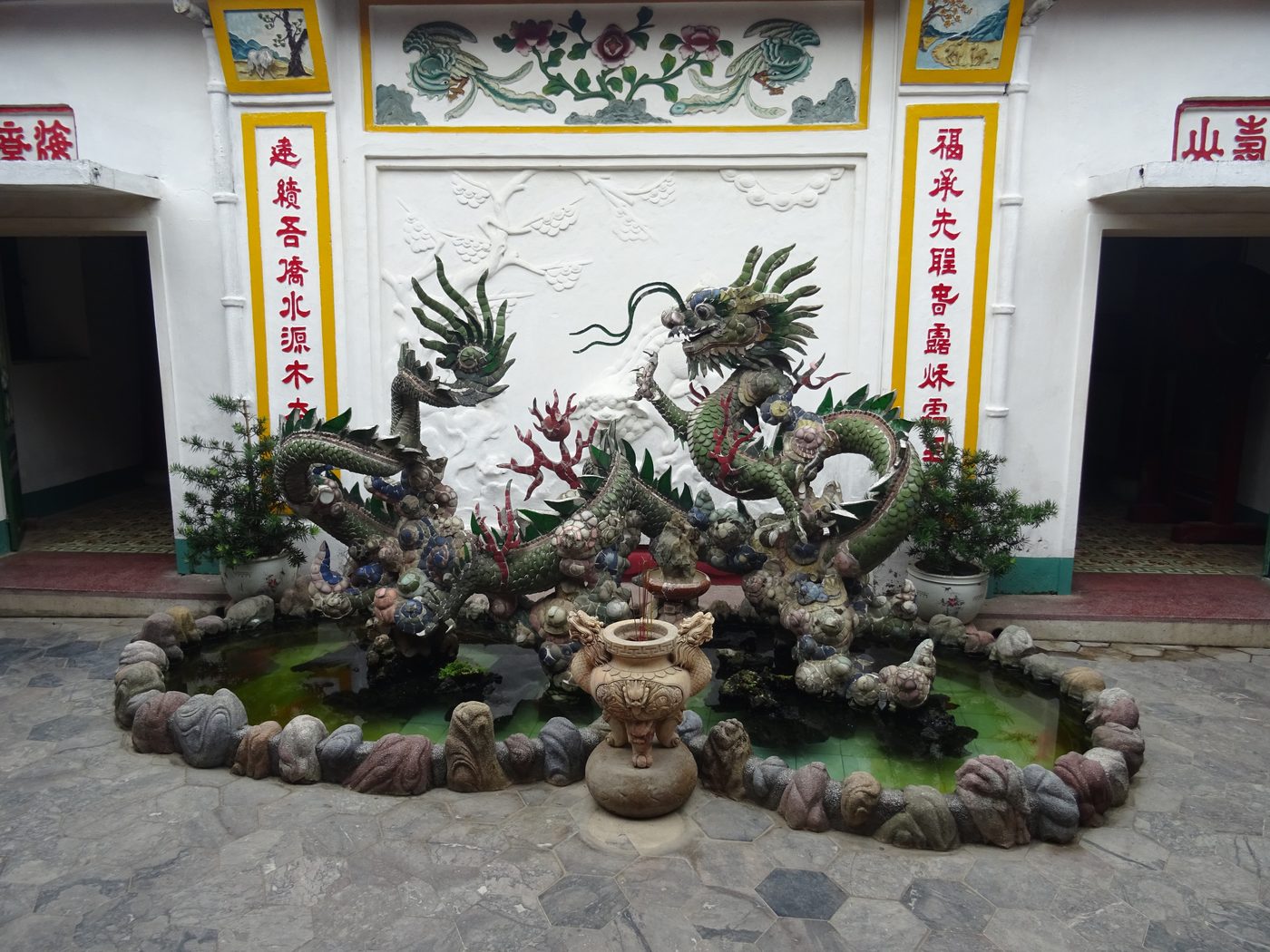
Hainanese communities carried that cult wherever they went. In 1875 they built the Quỳnh Phủ hall at Hội An, at once a shrine to the Chiêu Ứng Anh Liệt and the meeting house of the bang. The Chinese of the Gia Hội quarter in Huế raised a separate Chiêu Ứng shrine in 1887 and rebuilt it substantially in 1908. The cult counts 108 people. The two figures in the chronicle add up to 109 people, and this archive keeps both.
 Photograph · Christophe95 · Wikimedia Commons · CC BY-SA 4.0
The street was renamed by whoever held it
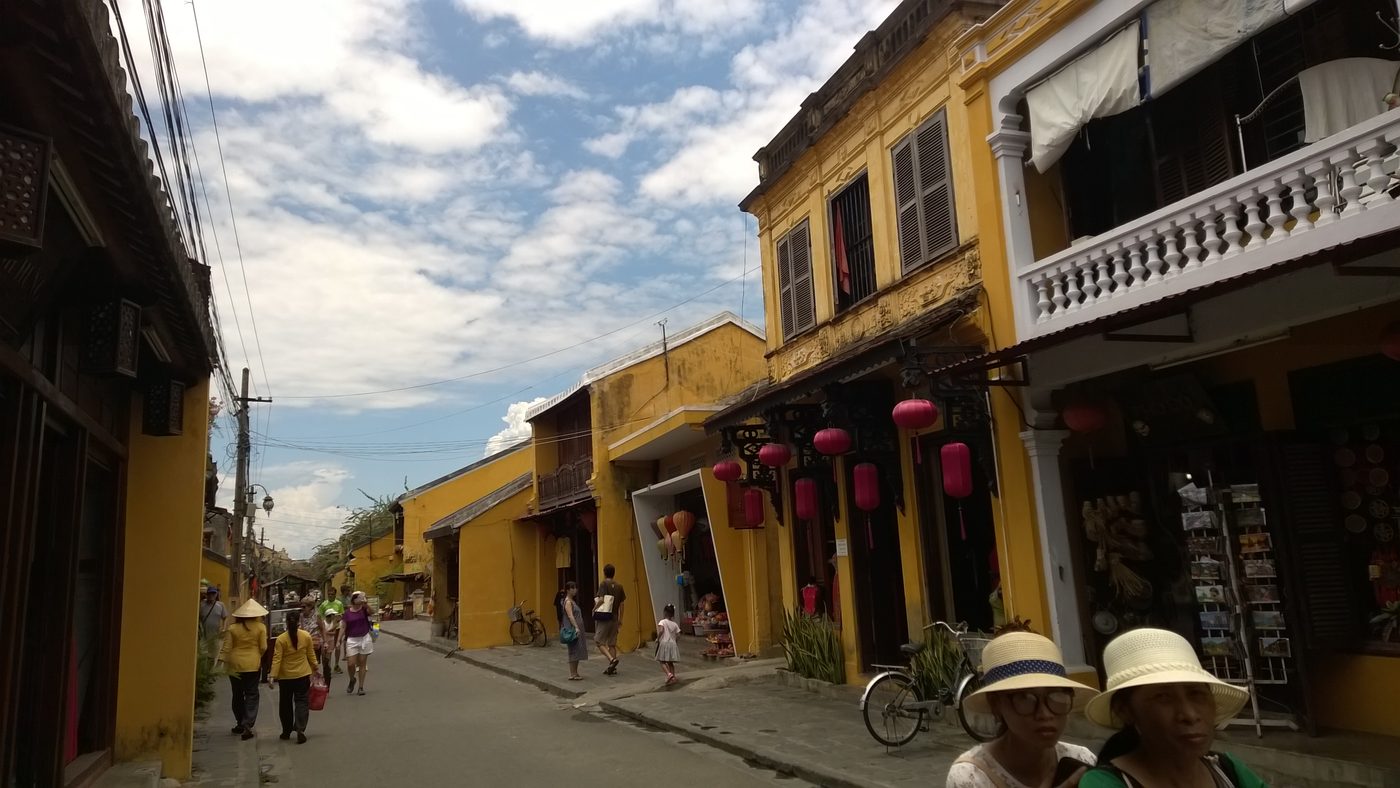
Almost every building of the Minh Hương and the Chinese in the old town stands on one street and the lanes off it. That street is the old Đại Đường nhai.
Under French rule it was called the Japanese street, because the covered bridge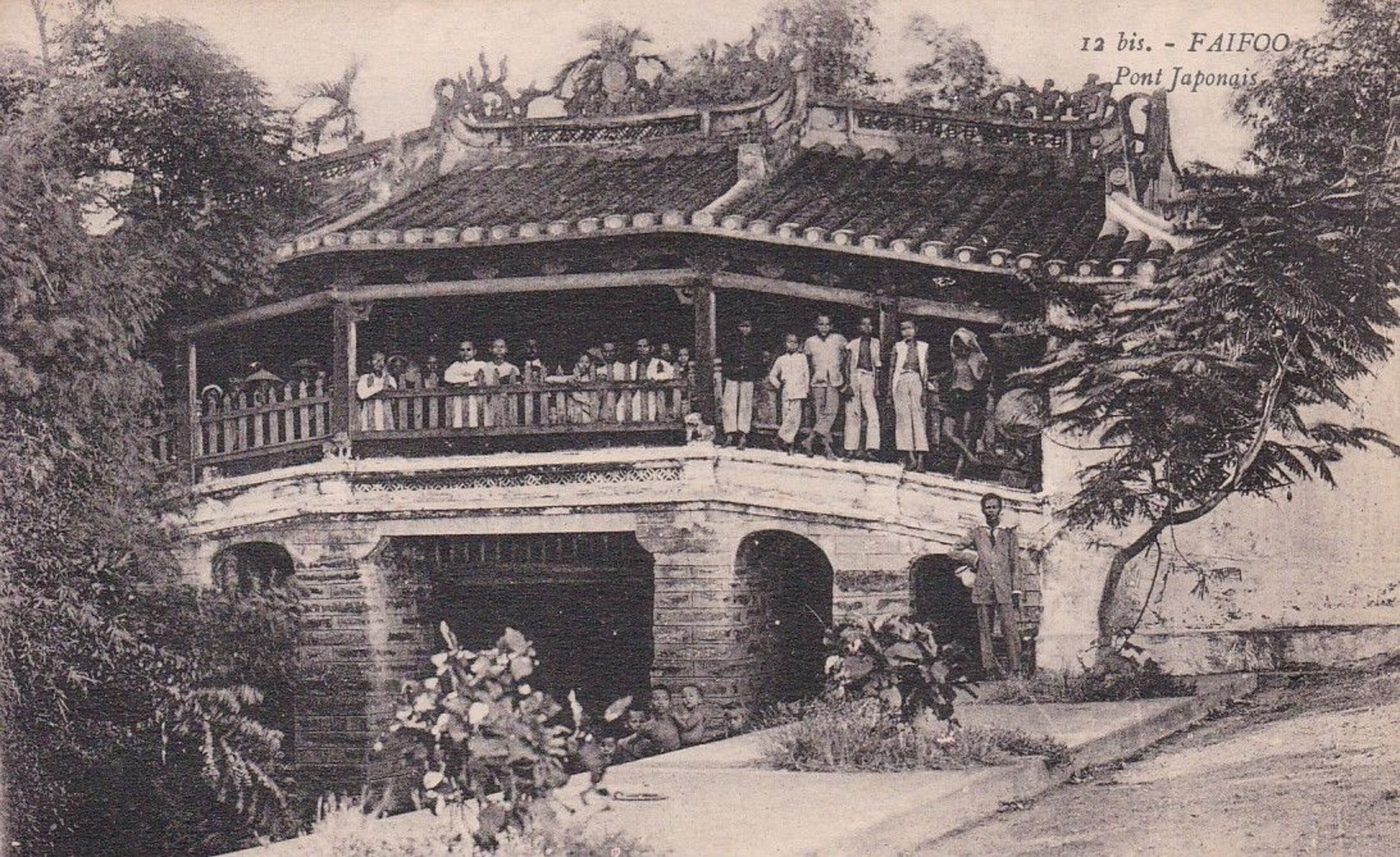 PLACE · ANCIENT TOWNThe Japanese Covered BridgeJapanese merchants paid for it, Vietnamese carpenters built it, a Chinese village kept it, and a Nguyễn lord gave it a name. After eight dismantlings, the part of the four-hundred-year-old bridge that is close to intact is the foundation. stands at the end of it. After reunification it took the name Trần Phú, the first General Secretary of the Communist Party of Vietnam. Three names on one row of houses, and not one of them chosen by the people who lived there.
End to end the street runs past the Chaozhou hall, the Quỳnh Phủ hall and the Minh Hương Tụy Tiên Đường. Then the Quan Công temple, the old Minh Hương pagoda that is now a museum, and the Fujian hall. Then the Trung Hoa hall of all 5 bang, the Cantonese hall, and the bridge.
 Photograph · P. Hughes · Wikimedia Commons · CC BY 4.0
The status went, the feast days stayed
The Minh Hương xã lasted as long as the Nguyễn dynasty did. Under French rule the colonial administration stopped recognising the institution formally. Since the August Revolution, Minh Hương has been a historical term and nothing more.
Through the dynasty the institution carried the names of Minh Hương men who left the town to serve as officials, as commanders and as writers. It was a register that kept people outside, and it was also a door they walked in through.
What ended was a legal status, not a population. The houses stayed where they were, the halls kept their doors open, and people went on making the offerings on the proper days.
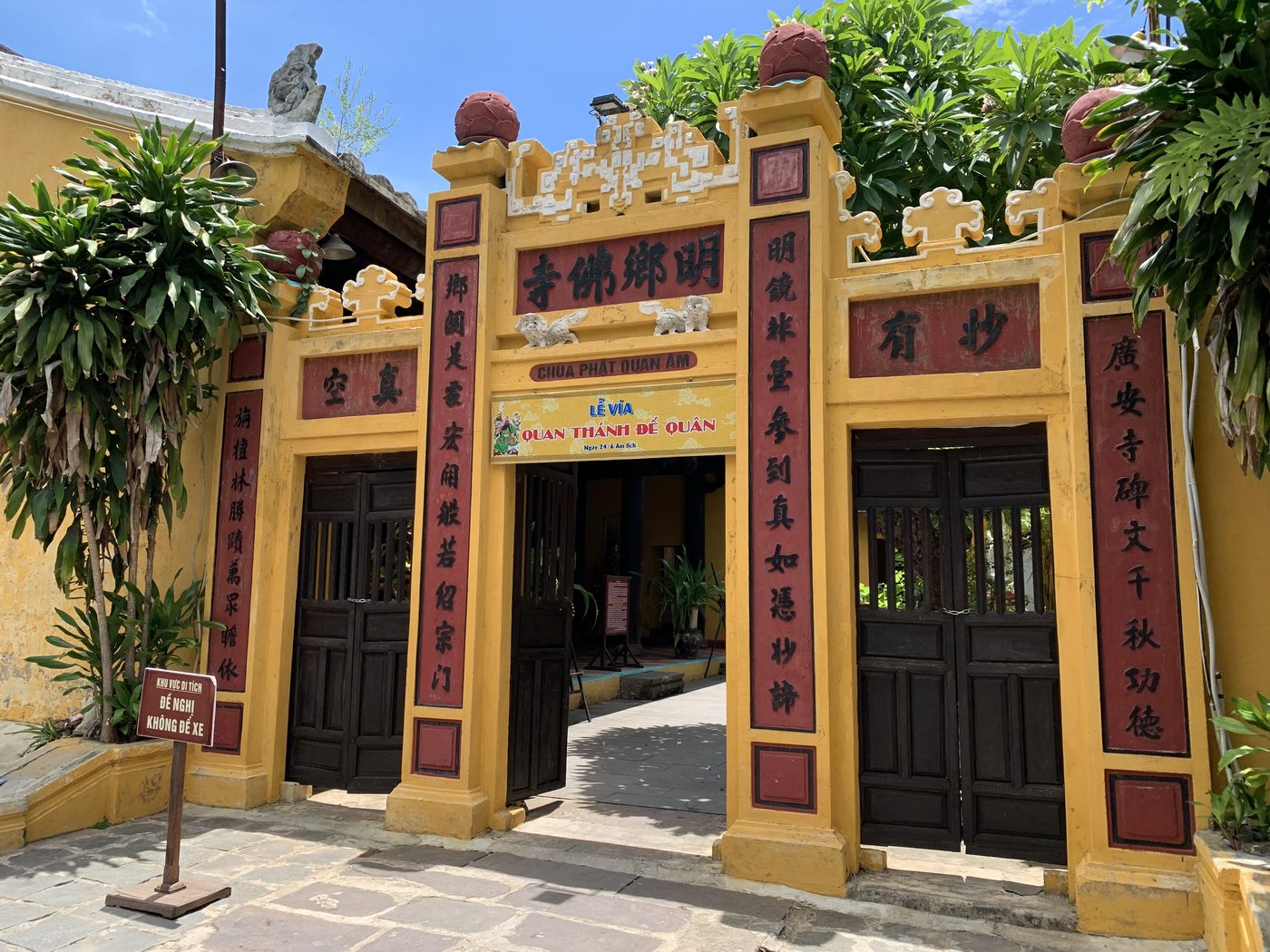
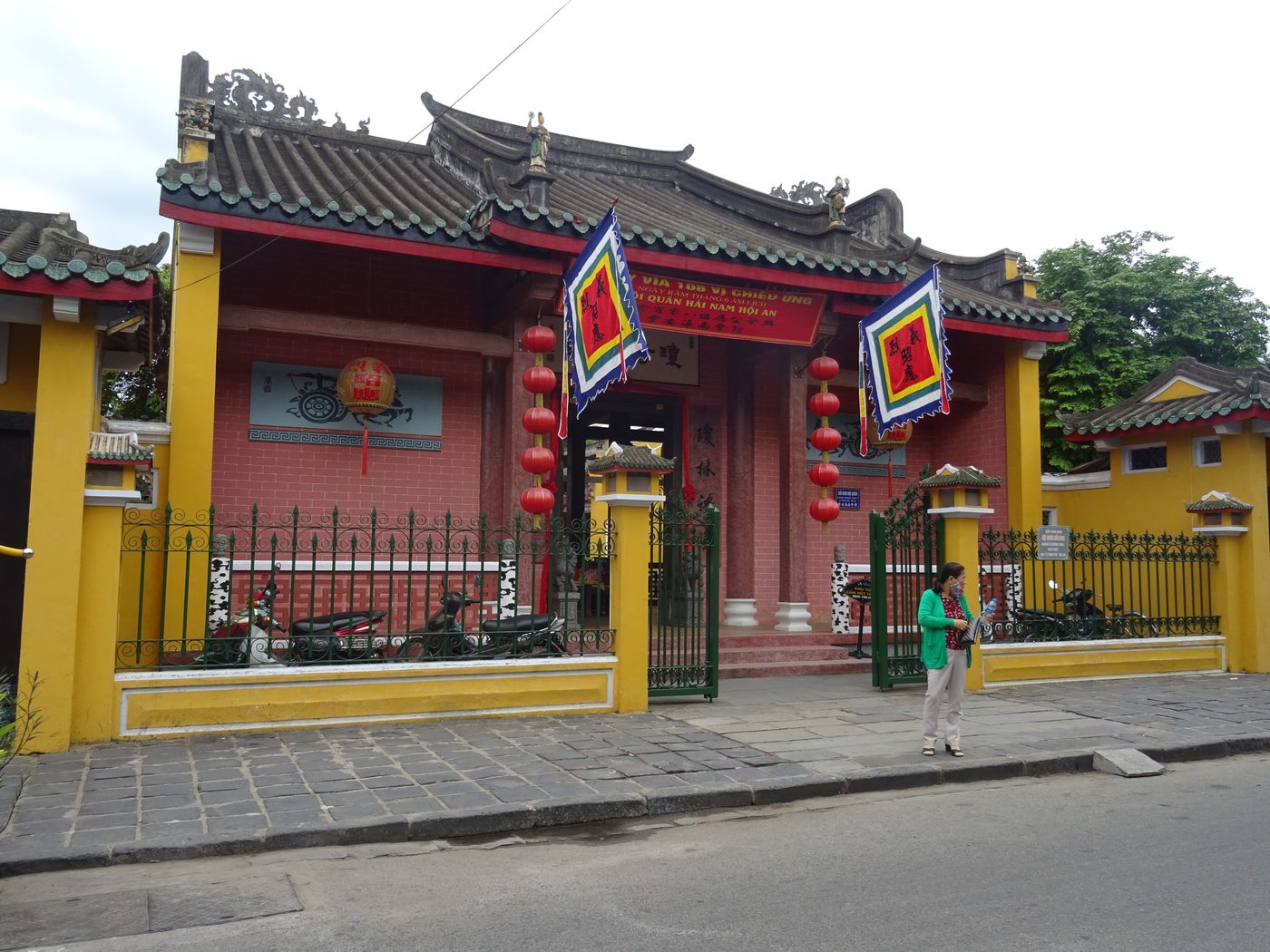
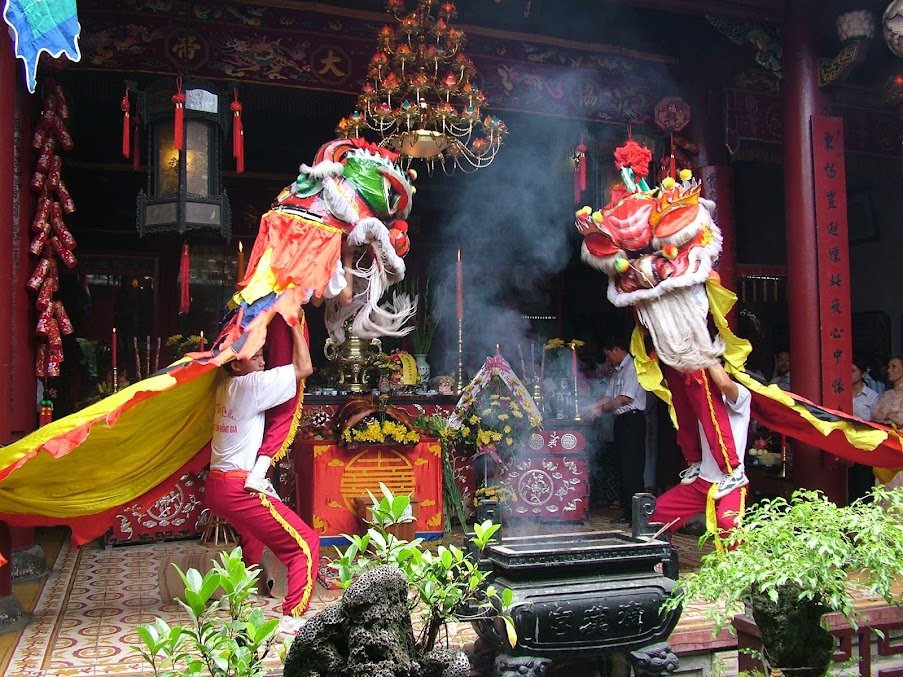
The Quan Công temple keeps the feast of Quan Thánh Đế Quân every year on the twenty-fourth day of the sixth lunar month. The custodians prepare it the day before. They hang the festival banners and set two great flags embroidered with Chinese characters at the main door.
The people who come are not only townspeople. They travel in from Đà Nẵng, Tam Kỳ and Quảng Ngãi. Among them the traders are still the largest group, which is fitting, since it was the trade that raised the temple.
A few hundred who know what they are
The Vietnamese census of 2009 counted 85,846,997 people, of whom 823,071 people were Hoa, that is 0.96 per cent. In Hồ Chí Minh City alone the count reached 524,000 people of Hoa origin as early as 1992.
Hội An is a different case altogether. The Taiwanese scholar Chiung Wi-vun did fieldwork there in three spells between 2012 and 2014, interviewing Minh Hương, Hoa and Vietnamese residents. He put the Minh Hương and the Hoa together at roughly 2,000 people out of a city of about 120,000 people people, some 2 per cent.
Within that figure the Hoa number around two thousand, children included, and the Minh Hương only a few hundred. He adds a qualification no census can measure. Those few hundred do not include the Minh Hương who have become entirely Vietnamese and no longer know that is what they are.

- “Về tổ chức bang, Minh Hương xã và Thanh Hà phố của người Hoa ở Việt Nam” — Khoa Văn học và Ngôn ngữ, ĐHKHXH&NV TP.HCM; phân biệt bang với Minh Hương xã, dẫn chỉ dụ tháng 7 năm 1827 đổi chữ Hương, và dẫn Chen Ching-Ho 1960
- “越南會安古城當代明鄉人、華人及越南人之互動關係與文化接觸” — Điền dã ba đợt 2012–2014 ở Hội An, đăng 《亞太研究論壇》số 61 (12/2015), tr. 131–155, Viện Nghiên cứu Trung ương Đài Bắc
- Tìm hiểu hoạt động ngoại thương của cộng đồng người Hoa ở Hội An (XVI – XVIII)
- “Kiến trúc cổ các hội quán của người Hoa ở Hội An (Quảng Nam)” — Trung tâm QLBT Di sản Văn hóa Hội An; niên đại từng hội quán và hệ khung đỡ mái
- “Tục thờ Chiêu Ứng của người Hoa Hải Nam” — dẫn nguyên văn Đại Nam thực lục về vụ án 1851 và kê hiện trạng thờ tự ở Huế, Hội An, Đà Nẵng
- “Lễ vía Quan Công” — Trung tâm QLBT Di sản Văn hóa Hội An; niên đại Quan Công miếu và trình tự lễ
- “Sejarah migrasi dan dasar pemerintahan Gia Long dan Minh Mang ke atas masyarakat Minh Huong di Hoi An, 1820–1840” — Universiti Sains Malaysia (tiếng Mã Lai)
- “Một số thông tin về Hội An, Quảng Nam qua ghi chép của Quốc sử quán triều Nguyễn trong Đại Nam thực lục”
- Ảnh mặt tiền hội quán Quỳnh Phủ (Hải Nam) ở Hội An chụp đúng dịp lễ vía; băng-rôn và cờ hội trong ảnh ghi tên lễ và ngày âm lịch
- “Về Hội An, dự lễ vía Quan Công” — Báo Văn Hóa
- Mục “Hội quán” — Trung tâm QLBT Di sản Văn hóa Hội An
- “Phố cổ Hội An” — Wikipedia tiếng Việt
- “Về một ngôn ngữ lai (Lingua-Franca) ở Hội An – Đà Nẵng vào thế kỷ XVIII”
- “Đô thị cổ Hội An” — Wikipedia tiếng Việt (khoảng sáu mươi nóc nhà Nhật ven sông đầu thế kỷ XVII; miếu Quan Công 1653; hội quán Phúc Kiến 1697 / 1759 / 1792; quân Trịnh tàn phá 1775; Cửa Đại bồi lấp; UNESCO ghi danh 1999 và chừng 1.360 di tích)
- Lịch sử — Văn hóa Hội An, trang tổng thuật của Trung tâm QLBT Di sản Văn hóa Hội An
- Nhớ về thương cảng Hội An — Phố cổ Hội An
- Thông tin nghiên cứu bảo tồn di sản — Chuyên đề: Di tích Chùa Cầu / Journal of Research in Heritage Preservation, Vol 03(55)-2021, Theme: The Japanese Covered Bridge (song ngữ Việt–Anh, 182 trang, 24 bài)
- Hải ngoại kỷ sự — khảo cứu kèm trích nguyên văn bản dịch Viện Đại học Huế 1963
- Phủ biên tạp lục — trọn 6 quyển, bản dịch Ngô Lập Chí, Khoa Xã hội, Trường Đại học Tổng hợp Hà Nội, 1959
- Đồ sứ Hizen - Nhật Bản phát hiện ở Hội An
- “Minh Hương” — Wikipedia tiếng Việt (di thần nhà Minh được các chúa Nguyễn thu nhận, cấp đất và lập làng riêng; đến 1698 làng Minh Hương tách khỏi làng Thanh Hà của người Thanh sang sau; con cháu họ về sau nói tiếng Việt)
- Thương cảng Hội An: Nhìn từ lịch sử huy hoàng — Báo Pháp Luật Việt Nam
- Sự hình thành và phát triển của Đô thị thương cảng Hội An trong bối cảnh hàng hải thế giới thế kỷ XVI–XVII — Trung tâm QLBT Di sản Văn hóa Hội An
- Hội An - trung tâm giao thương khu vực và quốc tế

- Tran Phu street of Hoi An in 2015 — Vuong Tri Binh, CC BY-SA 4.0
- Một vòng tham quan Tụy Tiên Đường Minh Hương Hội An đặc sắc — tourhoian.vn, Bản quyền tác giả
- Lễ vía Quan Công — Trung tâm Quản lý Bảo tồn Di sản Văn hóa Hội An, Bản quyền tác giả